So you’ve been scrolling through Korean street food videos at 2 AM again, haven’t you? And now you’re sitting there, stomach growling, wondering if you could actually make those gorgeous little rice rolls at home. Well, good news—kimbap is basically Korea’s gift to hungry people everywhere, and yes, you absolutely can make it. No, you don’t need to be a sushi chef. No, it won’t take all day. Let’s do this.
Why This Recipe is Awesome
Look, I’m not gonna sugarcoat it—kimbap is one of those dishes that looks way harder than it actually is. It’s like the cooking equivalent of a magic trick. You roll some rice and veggies in seaweed, slice it up, and suddenly you look like you know what you’re doing in the kitchen. It’s portable, customizable, and honestly perfect for meal prep if you’re into that whole “adulting” thing.
Plus, unlike sushi, there’s no raw fish to stress about (unless you want to add some, you rebel). It’s filled with seasoned vegetables, egg, and meat—basically a balanced meal wrapped up in a convenient little package. And here’s the kicker: it tastes better than it has any right to, considering how simple it is. Even my friends who “can’t cook” have nailed this recipe. If that’s not a ringing endorsement, I don’t know what is.
Ingredients You’ll Need
For the Rice:
- 3 cups short-grain white rice (the sticky stuff—don’t even think about using basmati)
- 2 tablespoons sesame oil
- 1 tablespoon salt
- 1 tablespoon sugar
For the Fillings:
- 5-6 sheets of gim (roasted seaweed)—get the kimbap-sized ones if you can
- 1 pound beef or spam (yes, spam is traditional and delicious, fight me)
- 5-6 danmuji (yellow pickled radish strips)—the bright yellow stuff
- 1 medium carrot, julienned
- 5-6 strips of cucumber, deseeded
- 1 bunch spinach
- 3-4 eggs for gyeran mari (rolled omelet)
- Soy sauce, garlic, sesame oil for seasoning
- Salt and pepper to taste
Optional but Recommended:
- Sesame seeds for sprinkling
- A bamboo rolling mat (makes life easier, trust me)
Step-by-Step Instructions
- Cook Your Rice Like You Mean It Cook the rice according to package directions, but make it a bit stickier than usual. Once it’s done, mix in sesame oil, salt, and sugar while it’s still hot. Let it cool to room temp—nobody wants to burn their fingers later.
- Prep All Your Fillings This is crucial, people. Get everything ready before you start rolling. Sauté your beef strips with soy sauce, garlic, and a touch of sesame oil until cooked through. If you’re using spam, just slice and pan-fry until crispy. Blanch the spinach for about 30 seconds, squeeze out the water, then season with sesame oil and salt.
- Make the Egg Rolls Beat those eggs with a pinch of salt. Pour into a hot, oiled pan and cook like a thin omelet. Once it’s set, roll it up while it’s still in the pan, then slice into strips. Boom—gyeran mari.
- Julienne Everything Else Cut your carrots and cucumbers into thin, long strips. If you bought whole danmuji, slice it into similar-sized strips. Everything should be roughly the same thickness so your rolls don’t look wonky.
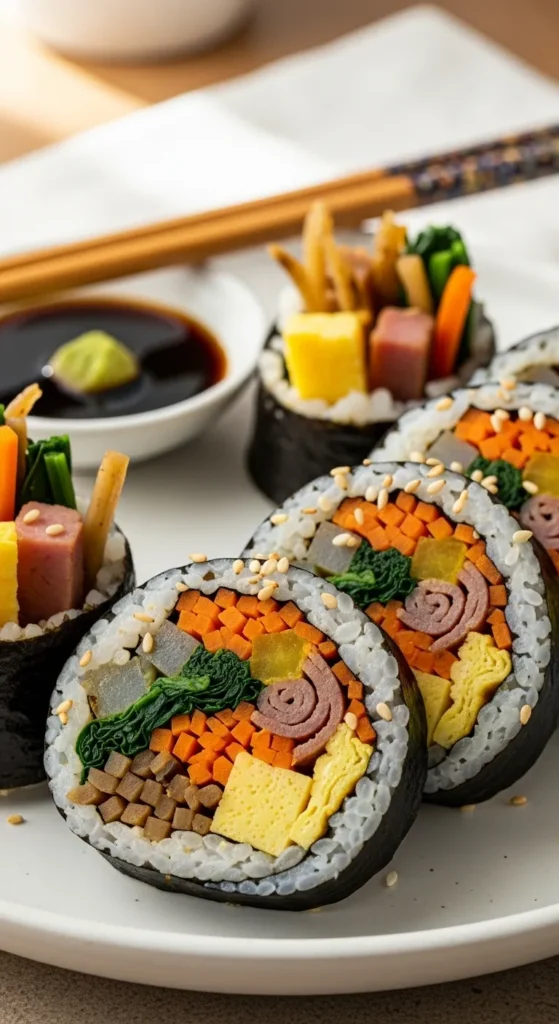
- Time to Roll (The Fun Part) Place a sheet of seaweed shiny-side-down on your bamboo mat. Spread about 3/4 cup of rice evenly over the seaweed, leaving about an inch at the top. Don’t make the rice layer too thick, or you’ll end up with a rice bomb instead of kimbap.
- Add Your Fillings Line up your fillings horizontally across the center—beef, egg, spinach, carrot, cucumber, and danmuji. Don’t overstuff it. I know it’s tempting, but less is more here.
- Roll It Up Tight Using the bamboo mat, roll from the bottom up, applying gentle but firm pressure to keep everything compact. When you reach the top, dab a little water on the exposed seaweed edge to seal it.
- Slice and Serve Brush the outside with a tiny bit of sesame oil, then slice into bite-sized pieces with a sharp knife. Wipe your knife between cuts to keep the slices clean. Sprinkle with sesame seeds if you’re feeling fancy.
Common Mistakes to Avoid
Using the wrong rice. Long-grain rice will not hold together, and you’ll end up with a sad pile of ingredients instead of kimbap. Short-grain is non-negotiable.
Skipping the rice seasoning. Unseasoned rice = bland kimbap. Don’t skip the sesame oil, salt, and sugar. That’s where the flavor lives.
Rolling with hot rice. Your seaweed will get soggy and tear, and honestly, you’ll probably burn yourself. Cool rice = happy rolling.
Overfilling. I get it, you want value for your effort. But cramming too much filling in there will make your roll explode. Be reasonable.
Using a dull knife. This will massacre your beautiful rolls. Sharpen that knife or at least use your sharpest one, and wipe it clean between cuts.
Alternatives & Substitutions
No beef? Use tuna mixed with mayo, imitation crab, or even tofu. Vegetarian kimbap is totally a thing and equally delicious.
Can’t find danmuji? Yellow pickled radish is the classic, but honestly, you could use regular pickles in a pinch. It won’t be traditional, but it’ll still taste good.
Hate cucumber? Leave it out. Kimbap is super forgiving. Some people add burdock root, fish cake, or even cheese (looking at you, fusion lovers).
No bamboo mat? Use a clean kitchen towel or even plastic wrap. It’s not ideal, but it works. IMO, though, just buy the mat—they’re like five bucks and make everything easier.
FAQs
Can I Make Kimbap the Night Before?
Absolutely! Wrap each roll tightly in plastic wrap and refrigerate. Just know that the seaweed might get a bit less crispy. Some people actually prefer it that way. Slice it fresh when you’re ready to eat.
Why Is My Kimbap Falling Apart?
Two main reasons: either your rice wasn’t sticky enough, or you didn’t roll it tight enough. Make sure you’re using short-grain rice and applying firm, even pressure when rolling.
Can I Freeze Kimbap?
Technically yes, but I wouldn’t recommend it. The texture gets weird when you thaw it. Fresh or refrigerated is the way to go. It’ll keep in the fridge for about 24 hours.
Do I Have to Use Sesame Oil?
I mean, you don’t have to do anything, but why would you skip the best part? Sesame oil gives kimbap that authentic Korean flavor. Without it, you’re basically making sad rice rolls.
What’s the Difference Between Kimbap and Sushi?
Great question! Kimbap uses seasoned rice with sesame oil, while sushi uses rice seasoned with vinegar. Plus, kimbap typically has cooked ingredients, while sushi often features raw fish. They’re cousins, not twins.
Can I Add Raw Fish to Kimbap?
Sure, if you want to. But that’s kind of making it more like a sushi roll. Traditional kimbap sticks to cooked ingredients, but hey, it’s your kitchen. Do what makes you happy.
How Do I Keep the Seaweed Crispy?
Don’t assemble your kimbap too far in advance, and store it in an airtight container if you’re not eating it right away. The seaweed will naturally soften over time when in contact with the rice.
Final Thoughts
There you have it—authentic kimbap that actually tastes like you bought it from a Korean street vendor (okay, maybe 85% as good, but still impressive). The first roll might look a little rough, but by the third one, you’ll be rolling like a pro.
The beauty of kimbap is that once you get the technique down, you can customize it however you want. Feeling adventurous? Add kimchi. Want it lighter? Skip the meat. The world is your oyster—or in this case, your rice roll.
Now go make yourself some kimbap and bask in the glory of actually cooking something that looks like the pictures. You’ve earned those bragging rights. And if anyone asks where you learned to make it? Just shrug mysteriously and say you’ve got skills. 😉
Related Recipes
- Easy Cheap Dinners That Save Your Budget
- Dinner Ideas on a Budget That Still Feel Comforting
- Fast Cheap Dinner Ideas That Don’t Taste Cheap
Printable Recipe Card
Want just the essential recipe details without scrolling through the article? Get our printable recipe card with just the ingredients and instructions.