So you’re scrolling through food pics at 11 PM, drooling over those glossy Korean glass noodles, and thinking, “I could totally make that… right?” Well, guess what? You absolutely can. Japchae isn’t some mystical dish that requires a culinary degree from Seoul—it’s actually pretty straightforward. And those chewy, slippery noodles tossed with colorful veggies and savory-sweet sauce? Yeah, you’re about to nail that.
Why This Recipe is Awesome
Let me break down why japchae deserves a permanent spot in your cooking rotation. First off, it looks fancy but isn’t—perfect for when you want to impress your friends without actually breaking a sweat. The sweet potato glass noodles (dangmyeon) have this incredible chewy texture that’s honestly addictive. One bite and you’ll understand why Koreans bring this to every celebration.
Plus, it’s ridiculously versatile. Got random veggies dying in your fridge? Throw ’em in. Vegetarian? Keep it veggie. Want protein? Add beef, chicken, or tofu. It’s basically the choose-your-own-adventure of noodle dishes. And here’s the kicker—it tastes even better the next day, so leftovers are actually a win. Room temperature japchae for lunch? Chef’s kiss.
Oh, and did I mention it’s naturally gluten-free if you use tamari instead of regular soy sauce? Yeah, this dish is checking boxes left and right.
Ingredients You’ll Need
For the noodles and veggies:
- 8 oz sweet potato glass noodles (dangmyeon) – don’t substitute with rice noodles, trust me
- 2 tablespoons sesame oil, divided
- 1 medium onion, thinly sliced
- 2 carrots, julienned (fancy word for matchstick-cut)
- 1 red bell pepper, thinly sliced
- 5 oz spinach, blanched
- 3-4 shiitake mushrooms, sliced (dried or fresh, your call)
- 2 cloves garlic, minced
- 2 green onions, chopped
For the protein (optional but recommended):
- 8 oz beef (ribeye or sirloin), thinly sliced
- 1 tablespoon soy sauce
- 1 teaspoon sugar
- 1 teaspoon sesame oil
For the sauce:
- 3 tablespoons soy sauce
- 2 tablespoons sugar
- 1 tablespoon sesame oil
- 1 teaspoon toasted sesame seeds
- Black pepper to taste
Step-by-Step Instructions
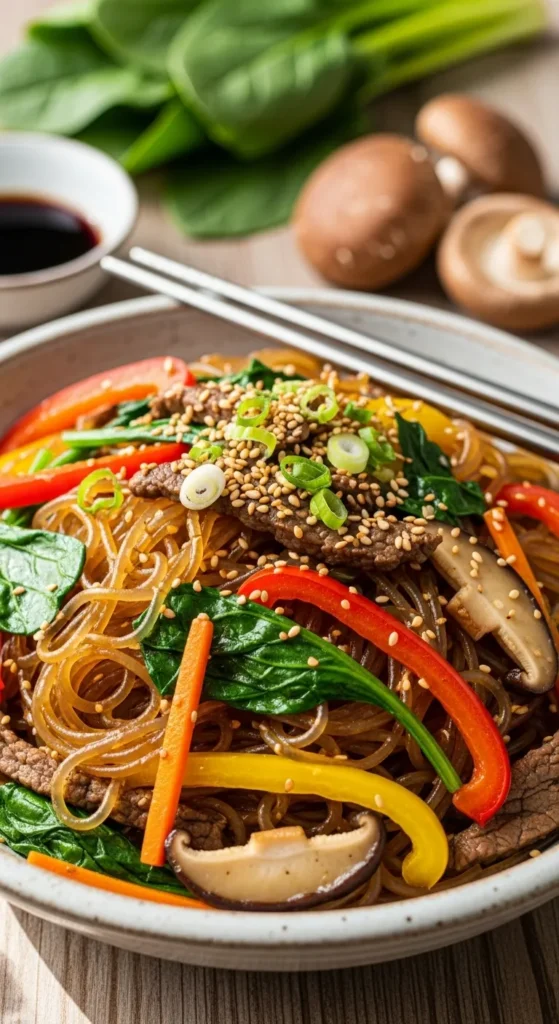
- Prep your noodles like a boss. Boil the sweet potato noodles according to package directions—usually about 6-7 minutes. You want them chewy, not mushy. Drain, rinse with cold water, and toss with 1 tablespoon of sesame oil to prevent sticking. Use kitchen scissors to cut them into more manageable lengths (nobody likes wrestling with 3-foot noodles).
- Marinate your beef. If you’re using meat, mix those beef slices with soy sauce, sugar, and sesame oil. Let it hang out for 10-15 minutes while you prep the veggies. This step is quick but makes a huge difference in flavor.
- Cook everything separately. Yeah, I know it sounds like extra work, but this is the secret to perfect japchae. Heat a large pan or wok over medium-high heat. Cook each veggie separately with a tiny bit of oil—about 1-2 minutes each. Onions first, then carrots, bell peppers, and mushrooms. Set them aside as you go.
- Spinach gets special treatment. Blanch it in boiling water for 30 seconds, shock it in ice water, squeeze out the excess liquid, and season with a pinch of salt and garlic. Done.
- Cook that beef. Crank the heat to high and sear the marinated beef for 2-3 minutes until cooked through. It should have a nice caramelized edge. Remove and set aside with your veggie pile.
- Mix the sauce. Whisk together soy sauce, sugar, sesame oil, sesame seeds, and black pepper in a small bowl. Taste it—it should be sweet, savory, and a little nutty.
- Bring it all together. In your biggest pan (or return everything to the wok), combine noodles, all the cooked veggies, beef, and sauce. Toss gently over medium heat for 2-3 minutes until everything’s heated through and well-coated. Don’t overmix or you’ll break the noodles.
- Finish strong. Top with green onions and extra sesame seeds. Serve warm or at room temperature.
Common Mistakes to Avoid
Overcooking the noodles. Mushy glass noodles are sad glass noodles. They should be chewy and bouncy, not falling apart. Check them a minute before the package says.
Cooking everything together in one pan. Look, I get it—fewer dishes sounds great. But each veggie needs its own moment to shine without turning into a soggy mess. Take the extra five minutes.
Skipping the sesame oil on the noodles. They will stick together into one giant noodle blob. You don’t want that chaos.
Using the wrong noodles. Sweet potato glass noodles are NOT the same as rice vermicelli or bean thread noodles. The texture is completely different. Find the right ones at any Asian grocery store—they’re usually labeled “dangmyeon” or “Korean glass noodles.”
Adding the sauce too early. If you sauce the noodles before combining everything, you’ll end up with uneven flavor distribution and potentially soggy veggies.
Alternatives & Substitutions
No beef? Use chicken thighs (juicier than breast, IMO), pork, shrimp, or just load up on extra mushrooms and tofu. Honestly, veggie-only japchae slaps.
Can’t find sweet potato noodles? Check the international aisle at regular supermarkets or order online. But seriously, these noodles are what make japchae special—it’s worth hunting them down.
Vegetable swaps: Use whatever you’ve got. Zucchini, bok choy, cabbage, snap peas—they all work. Just keep the colors vibrant for that classic japchae look.
Soy sauce alternatives: Tamari for gluten-free, coconut aminos for soy-free (though the flavor will be slightly different).
Sugar substitute: Honey or agave works, though traditional japchae is definitely on the sweeter side. Start with less if you’re not into sweet-savory combos.
FAQs
Can I make japchae ahead of time?
Absolutely! In fact, japchae is one of those magical dishes that tastes better after sitting for a few hours. The noodles absorb all that delicious sauce. Make it the night before, store it in the fridge, and serve it at room temperature or give it a quick reheat. Just add fresh sesame seeds and green onions before serving.
Why are my noodles clumping together?
You forgot the sesame oil, didn’t you? Toss those freshly cooked noodles with oil immediately after draining. If they’ve already clumped, run them under warm water and add more sesame oil while gently separating them with your hands.
Can I use dried mushrooms instead of fresh?
Totally. Soak dried shiitake mushrooms in hot water for about 20 minutes until soft, squeeze out the excess water, remove the stems, and slice. The soaking liquid is liquid gold—save it for soup or use it to cook rice.
Is japchae supposed to be sweet?
Yeah, traditional japchae leans sweet. It’s that Korean sweet-savory balance. If you’re not into it, dial back the sugar to 1 tablespoon or even less. But give the traditional version a shot first—you might surprise yourself.
How do I store leftovers?
Airtight container in the fridge for up to 4 days. The noodles will firm up when cold (that’s normal), but they soften again at room temperature. Some people actually prefer eating cold japchae straight from the fridge on a hot day.
Can I freeze japchae?
Technically yes, but the texture won’t be quite the same after thawing. The noodles can get a bit rubbery. If you must freeze it, use it within a month and reheat gently with a splash of water or broth.
What should I serve with japchae?
It’s honestly a complete meal on its own, but it pairs beautifully with Korean BBQ, kimchi, rice, or just some simple grilled protein. FYI, it’s also a popular side dish at Korean celebrations and potlucks.
Final Thoughts
See? Japchae isn’t scary at all. Yeah, there’s some chopping and multiple pans involved, but the actual cooking is quick and foolproof. Once you nail this recipe, you’ll be making it on repeat—guaranteed. Those chewy, glossy noodles with perfectly cooked veggies will have everyone asking for the recipe.
The best part? You can totally customize this to your taste and whatever’s in your fridge. Japchae is forgiving like that. So grab those sweet potato noodles, channel your inner Korean chef, and get cooking. Your taste buds will thank you, and you’ll have serious bragging rights. Now go make some magic happen in that kitchen—you’ve got this!
Related Recipes
- Dinner Ideas on a Budget That Still Feel Comforting
- Fast Cheap Dinner Ideas That Don’t Taste Cheap
- Authentic Kimbap Recipe That Tastes Like Korea
Printable Recipe Card
Want just the essential recipe details without scrolling through the article? Get our printable recipe card with just the ingredients and instructions.