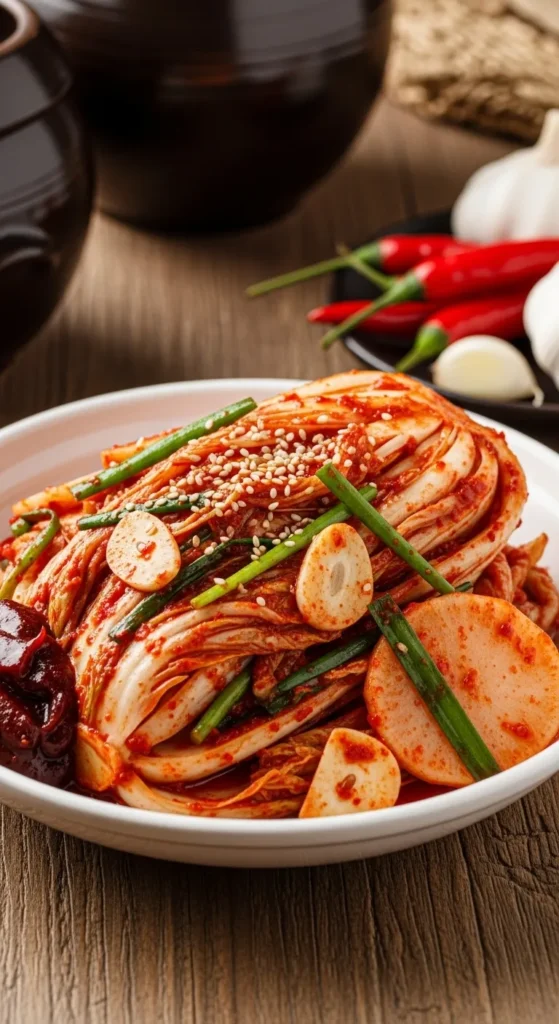
So you’ve been staring at the kimchi jars at your local Asian market, wondering if you could actually make this fermented magic at home, huh? Well, spoiler alert: you absolutely can. And honestly? It’s way easier than you think. Sure, it takes a bit of patience (because, you know, fermentation), but the actual hands-on work is minimal. Plus, once you nail this recipe, you’ll be that friend who casually mentions they make their own kimchi. Instant cool points.
Why This Recipe is Awesome
Let me count the ways. First off, homemade kimchi tastes like a flavor explosion compared to store-bought stuff—no weird preservatives, just pure fermented goodness. Second, it’s ridiculously versatile. Eat it straight from the jar at 2 AM (no judgment), toss it in fried rice, add it to ramen, or use it to elevate literally any boring meal.
Here’s the best part: this recipe uses gochujang (Korean chili paste) which gives your kimchi this deep, savory, slightly sweet kick that regular recipes miss. It’s like the secret weapon nobody tells you about. And honestly? It’s pretty much fail-proof. If I managed not to screw it up on my first try, you’re golden.
Oh, and did I mention your gut will thank you? All those probiotics working their magic while you’re just out here enjoying spicy cabbage. Win-win.
Ingredients You’ll Need
For the Cabbage:
- 1 large napa cabbage (about 2-3 pounds)—the star of the show
- 1/4 cup coarse sea salt—don’t be stingy
- Water for brining
For the Paste:
- 1/4 cup gochugaru (Korean red pepper flakes)—this is non-negotiable, people
- 3 tablespoons gochujang—the MVP ingredient
- 1 tablespoon fish sauce—trust the process
- 1 tablespoon soy sauce
- 1 tablespoon sugar (white or brown, whatever you’ve got)
- 5 cloves garlic, minced—or more if you’re feeling bold
- 1 tablespoon fresh ginger, grated
- 3-4 green onions, chopped into 2-inch pieces
- 1 small daikon radish, julienned (optional but recommended)
- 1/2 cup water
Step-by-Step Instructions
- Prep that cabbage. Cut your napa cabbage lengthwise into quarters. Remove the core (just chop it out), then chop each quarter into 2-inch pieces. Toss everything into a large bowl.
- Salt it up. Sprinkle the sea salt all over the cabbage pieces, making sure to get between the leaves. Add enough water to barely cover the cabbage. Let it sit for 1-2 hours, tossing it every 30 minutes or so. You want the cabbage to get soft and bendy—not crunchy.
- Rinse like your life depends on it. After the cabbage has done its salty bath, rinse it under cold water at least 3 times. You don’t want it too salty, trust me. Drain well and set aside.
- Make the magic paste. In a bowl, mix together gochugaru, gochujang, fish sauce, soy sauce, sugar, garlic, ginger, and water. Stir until it looks like a vibrant red paste. This is where the flavor lives, so taste it—it should be spicy, savory, and slightly sweet.
- Get messy. Put on some gloves (seriously, unless you want spicy fingers for days), then add your drained cabbage, green onions, and daikon to the paste. Mix everything together with your hands, making sure every piece is coated. Don’t be shy—really get in there.
- Pack it tight. Transfer your kimchi into a clean glass jar or airtight container, pressing down firmly to remove air bubbles. Leave about an inch of space at the top because this baby’s gonna ferment and expand.
- Let it ferment. Leave the jar at room temperature for 1-5 days, depending on how funky you like it. Open it once a day to release gases (it’ll bubble—that’s normal). Taste it daily until it hits your perfect level of tanginess.
- Refrigerate and enjoy. Once it’s fermented to your liking, stick it in the fridge. It’ll keep for months and actually gets better with age. The flavors develop and deepen—it’s like fine wine, but spicier.
Common Mistakes to Avoid
Not rinsing enough after salting. Look, I get it—you’re impatient. But if you skimp on rinsing, your kimchi will be saltier than your ex’s attitude. Rinse it thoroughly, people.
Using regular chili flakes instead of gochugaru. This isn’t the time to improvise with what’s in your spice rack. Gochugaru has a specific texture and heat level. Regular chili flakes will make your kimchi taste… wrong.
Skipping the gloves. Unless you enjoy burning sensations on your hands (and accidentally rubbing your eyes later like a fool), wear gloves. Learn from my mistakes.
Not pressing down the kimchi properly. Air pockets = potential mold. Press that kimchi down like you mean it when packing your jar.
Freaking out when it bubbles. Relax. Bubbling is good. It means fermentation is happening. You’re doing great, sweetie.
Alternatives & Substitutions
No fish sauce? Use more soy sauce or try vegan fish sauce. Honestly, you could even add a bit of miso paste for that umami depth. The kimchi police won’t come for you, I promise.
Can’t find gochugaru? This one’s trickier, but in a pinch, you could use a mix of paprika and cayenne pepper. Just know it won’t be quite the same—gochugaru has this smoky-sweet thing going on that’s hard to replicate.
Not a fan of daikon? Skip it or swap it for julienned carrots. Some people add Asian pear for sweetness too, which is honestly delicious.
Want it vegetarian/vegan? Ditch the fish sauce and use extra soy sauce or tamari. Add a sheet of kombu (seaweed) to the brine for extra umami if you’re feeling fancy.
Low on gochujang? You can reduce it to 2 tablespoons and add a bit more gochugaru, though you’ll lose some of that rich depth. IMO, it’s worth making a grocery run for the real deal.
FAQs
How long does homemade kimchi last?
In the fridge? Months, my friend. Seriously, I’ve had kimchi going strong for 6+ months. It just keeps fermenting slowly and getting tangier. Some people prefer it super aged—it’s all about personal preference.
Can I make kimchi without gochujang?
Technically yes, traditional kimchi recipes don’t always include it. But why would you want to? Gochujang adds this incredible depth that takes your kimchi from good to “holy crap, did you really make this?” Plus, it helps the paste stick better to the cabbage.
Why is my kimchi not bubbling?
Could be a few things: your room is too cold (fermentation slows down below 65°F), you used iodized salt (which can inhibit fermentation), or you just need to give it more time. Be patient—sometimes it takes 2-3 days to really get going.
Is it supposed to smell this… intense?
Yes. Kimchi smells like fermented cabbage because, well, that’s exactly what it is. If it smells sour and funky but not rotten or moldy, you’re golden. Your roommates might complain, but that’s their problem.
Can I ferment it in a plastic container?
You can, but glass is better. Plastic can absorb odors and potentially leach chemicals when exposed to acidic fermented foods. Glass jars are your best bet—plus you can see the fermentation happening, which is oddly satisfying.
What if I see white stuff on top?
If it’s a thin white film, that’s yeast—totally harmless, just scrape it off. If it’s fuzzy and green or black, that’s mold. Toss it and start over. This is why pressing down your kimchi to eliminate air pockets is so important.
How spicy is this going to be?
With the measurements I’ve given, it’s moderately spicy—enough kick to be interesting without destroying your taste buds. Want it milder? Cut the gochugaru in half. Want to feel alive? Add more. You’re the boss here.
Final Thoughts
And there you have it—your very own batch of homemade kimchi with that gochujang goodness. Is it a bit of a process? Sure. But is it worth it when you’re eating the best kimchi of your life straight from the jar at midnight? Absolutely.
The beauty of making kimchi at home is that you can tweak it to your exact preferences. Like it extra garlicky? Add more garlic. Want it funkier? Let it ferment longer. It’s your fermented masterpiece.
Now go forth and ferment with confidence. Your taste buds (and your gut bacteria) will thank you. And hey, if you mess it up the first time, who cares? It’s cabbage. Try again. You’ve got this! 🥬
Related Recipes
Printable Recipe Card
Want just the essential recipe details without scrolling through the article? Get our printable recipe card with just the ingredients and instructions.