
So you’re scrolling through your phone at 8 PM, stomach growling, wondering what the heck to make for dinner that won’t require a culinary degree or three hours of your life? Yeah, I’ve been there. Like, every Tuesday. But here’s the thing—Korean noodles are about to become your new obsession. They’re slurpy, savory, satisfying, and honestly so easy you’ll wonder why you’ve been ordering takeout this whole time. Plus, you get to feel fancy without actually being fancy, which is basically the sweet spot of home cooking.
Why This Recipe is Awesome
Let me break this down for you. First off, this recipe takes maybe 20 minutes from start to finish. That’s less time than it takes for delivery to show up at your door. Second, it’s virtually impossible to mess up—trust me, if I can nail it while simultaneously responding to texts and binge-watching a K-drama, you definitely can too.
The flavors are insane. We’re talking sweet, spicy, savory, with just enough garlic to make you feel alive. It’s got that perfect chewy noodle texture that makes you want to slurp aggressively (no judgment here). The sauce clings to every strand like it was meant to be, and honestly, it’s comfort food that doesn’t leave you feeling like you need a nap afterward.
Plus, it’s super customizable. Vegetarian? Cool. Want to add protein? Go for it. Feeling spicy? Crank up the heat. This recipe basically adapts to whatever mood you’re in, which is more than I can say for most recipes that act all high-maintenance.
Ingredients You’ll Need
Here’s what you’re grabbing from your pantry and fridge:
For the noodles:
- 8 oz Korean wheat noodles (somyeon or regular spaghetti works too—we’re not snobs here)
- 2 tablespoons sesame oil (the toasted kind, please)
For the sauce:
- 3 tablespoons soy sauce (low sodium if you’re watching your salt intake)
- 2 tablespoons gochugaru (Korean chili flakes—this is where the magic happens)
- 1 tablespoon honey or brown sugar (sweetness = balance)
- 2 tablespoons rice vinegar (gives it that tang)
- 3 cloves garlic, minced (or like 1.5 teaspoons of the jarred stuff, no shame)
- 1 tablespoon gochujang (Korean chili paste—find it at any Asian market or online)
- 1 teaspoon grated ginger (fresh is best, but powder works in a pinch)
For toppings:
- 2 green onions, sliced thin
- 1 tablespoon toasted sesame seeds
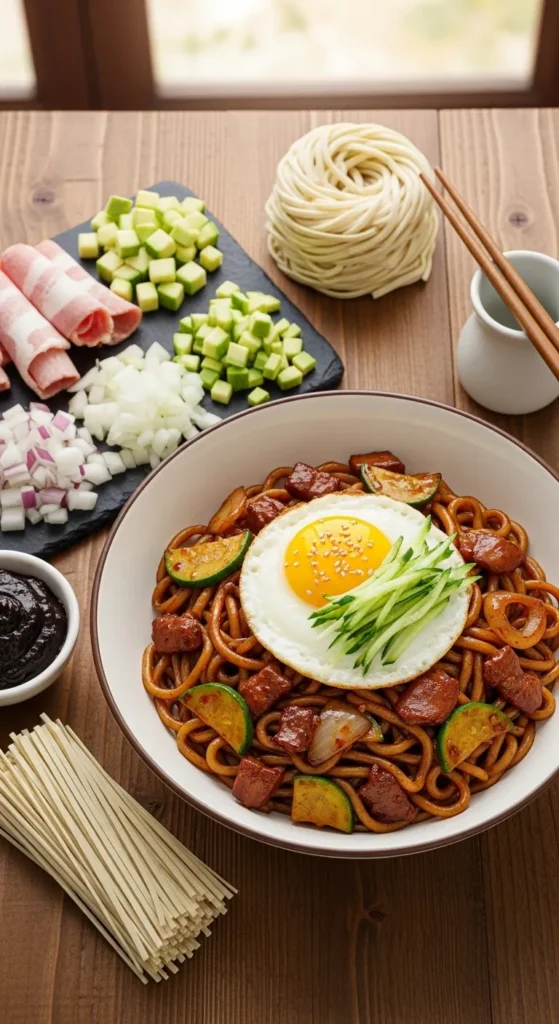
- A fried egg (optional but highly recommended)
- Cucumber strips (for crunch and freshness)
- Kimchi on the side (because why not?)
Step-by-Step Instructions
- Boil your noodles. Get a big pot of water boiling—don’t be stingy with the water here. Cook your noodles according to package directions, usually about 4-5 minutes. You want them chewy, not mushy. Drain them and rinse under cold water to stop the cooking process.
- Make the sauce while you wait. In a small bowl, whisk together soy sauce, gochugaru, honey, rice vinegar, minced garlic, gochujang, and ginger. It should look like a gorgeous reddish-brown sauce that smells incredible. If it doesn’t smell amazing, check your ingredients because something’s off.
- Toss everything together. Put your drained noodles in a large bowl. Drizzle with sesame oil and toss to coat. Then add your sauce and mix it all up like you mean it. Make sure every noodle gets some love.
- Prep your toppings. Slice those green onions, toast your sesame seeds if they’re not already toasted, and julienne your cucumber into thin matchsticks. If you’re frying an egg, do that now—runny yolk is the way to go, IMO.
- Plate and devour. Divide the noodles between bowls, top with green onions, sesame seeds, cucumber, and that beautiful fried egg. Mix it all together before eating so the yolk becomes part of the sauce. Grab chopsticks or a fork (zero judgment) and go to town.
Common Mistakes to Avoid
Overcooking the noodles. Seriously, set a timer. Mushy noodles are a tragedy we can prevent together. You want that chewy, springy texture that makes Korean noodles so addictive.
Skipping the cold water rinse. I know it seems like an extra step, but rinsing stops the cooking and removes excess starch. It’s the difference between clumpy sadness and silky perfection.
Being scared of the spice. Look, if you can’t handle heat, start with less gochugaru and gochujang. But don’t skip them entirely—they’re what makes this dish actually taste Korean and not just “noodles with soy sauce.”
Not tasting as you go. Everyone’s palate is different. Taste your sauce before committing and adjust the sweetness, saltiness, or heat to your liking.
Forgetting the sesame oil. This is non-negotiable. It adds a nutty richness that makes everything taste more expensive than it actually is.
Alternatives & Substitutions
Can’t find Korean noodles? Use spaghetti, linguine, or even ramen noodles (minus the seasoning packet). The texture won’t be identical, but honestly, it’ll still be delicious.
No gochugaru? Red pepper flakes can work, though they’re not quite as smoky and complex. Start with less since they can be spicier.
Vegetarian or vegan? Skip the egg and maybe add some crispy tofu or edamame for protein. Use maple syrup instead of honey. Done.
Don’t like cucumber? Swap in julienned carrots, blanched bean sprouts, or even shredded cabbage. You just want something fresh and crunchy to balance the richness.
Out of rice vinegar? Apple cider vinegar works, or even a squeeze of fresh lime juice. Just add a little at a time—you’re looking for brightness, not salad dressing.
Frequently Asked Questions
Can I make this ahead of time?
Sure, but here’s the thing—noodles are always best fresh. If you must prep ahead, keep the noodles, sauce, and toppings separate in the fridge. Toss everything together right before eating. The noodles will absorb sauce over time and get a bit soggy, FYI.
How spicy is this really?
It’s got a kick, but it’s not “call the fire department” spicy. Think medium heat with lots of flavor. You can always adjust by using less gochugaru and gochujang if you’re sensitive to spice.
Can I add protein to this?
Absolutely! Grilled chicken, beef bulgogi, shrimp, tofu—go wild. Cook your protein separately and add it on top. The fried egg technically counts as protein too, so you’re already halfway there.
Will this keep as leftovers?
It’ll keep in the fridge for 2-3 days, but again, the texture won’t be quite the same. The noodles absorb the sauce and lose some of their chewiness. Still tasty, just different. You might want to add a splash of water when reheating.
Where do I buy Korean ingredients?
Any Asian grocery store will have everything you need. Can’t get to one? Amazon or H Mart online ship most Korean ingredients. Gochujang and gochugaru are pantry staples you’ll use again and again, so they’re worth investing in.
Can kids eat this?
Depends on the kid and their spice tolerance. You can make a milder version with less chili paste and flakes. Most kids love noodles, so it’s worth a shot.
Is this actually authentic?
It’s inspired by Korean flavors and cooking techniques, but I’m not claiming it’s straight from a Korean grandma’s kitchen. It’s more like Korean-American fusion that tastes awesome and won’t stress you out.
Final Thoughts
Look, you’ve now got a recipe that’s quick, delicious, and way more impressive than it has any right to be. These Korean noodles will become your go-to when you want something satisfying without all the fuss. They’re perfect for busy weeknights, lazy weekends, or whenever you just want to eat something that makes you genuinely happy.
The best part? Once you nail this, you can riff on it endlessly. Add different vegetables, switch up the protein, adjust the spice level—make it yours. Now go impress someone—or yourself—with your new culinary skills. You’ve earned it!
Related Recipes
- Ninja Air Fryer Recipes Worth Trying
- Cheesy Pizza Casserole That Feeds a Crowd
- Easy Thanksgiving Desserts Anyone Can Make
Printable Recipe Card
Want just the essential recipe details without scrolling through the article? Get our printable recipe card with just the ingredients and instructions.