
So you’re craving something creamy, sweet, and absolutely heavenly but don’t want to stand over the stove for hours? Yeah, I get it. Life’s too short for complicated desserts that require a culinary degree to pull off. Enter this vanilla pudding recipe—your new best friend in the kitchen. It’s silky, it’s dreamy, and honestly, it’s so good you might just lick the bowl clean (and I won’t judge you for it).
Why This Recipe is Awesome
Look, I’m not one to oversell things, but this vanilla pudding is basically liquid gold. It’s idiot-proof—and trust me, I’ve tested that theory more than once. You need maybe 20 minutes of actual work, and the rest is just waiting around while the magic happens.
What makes this recipe special? First off, it uses real vanilla extract (none of that artificial nonsense), whole milk for ultimate creaminess, and just the right amount of sugar to make your taste buds do a happy dance. Plus, it’s way cheaper than buying those little cups from the store that taste like they’ve been sitting on a shelf since 2019.
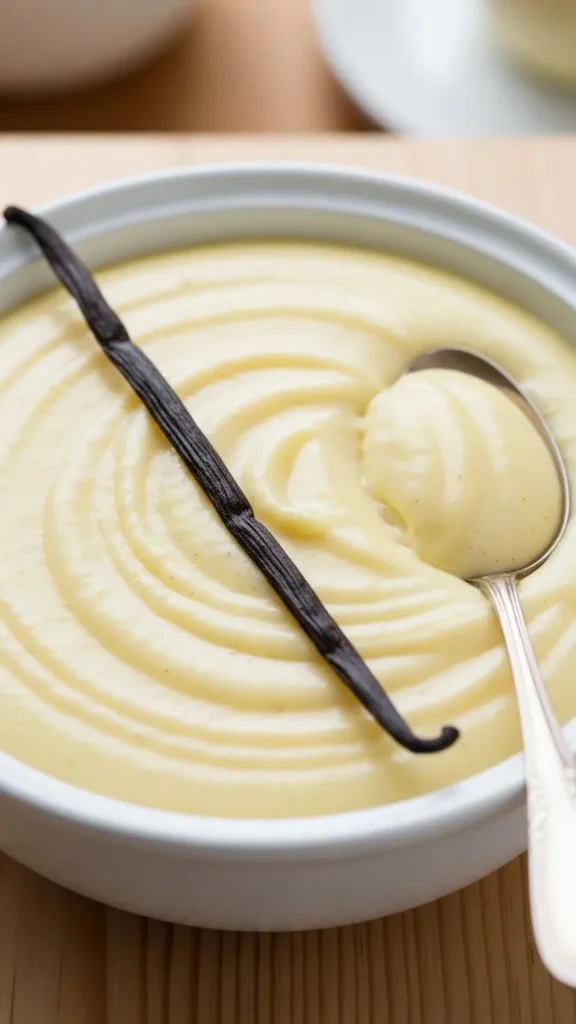
The texture? Absolutely perfect. Not too thick that you need a chisel to get through it, and not so thin that it’s basically flavored milk. It’s that sweet spot where your spoon glides through like butter, and every bite feels like a warm hug for your soul.
Ingredients You’ll Need
Here’s what you’ll need to gather—and no, you probably don’t need a special trip to some fancy grocery store:
- 2 cups whole milk (don’t even think about using skim—we’re not here to make sad pudding)
- 1/2 cup granulated sugar (the good stuff, not artificial sweetener)
- 3 large egg yolks (save the whites for scrambled eggs tomorrow)
- 3 tablespoons cornstarch (your thickening superhero)
- 1/4 teaspoon salt (just a pinch to make everything pop)
- 2 teaspoons pure vanilla extract (this is where the magic lives)
- 2 tablespoons unsalted butter (for that extra richness)
That’s it! No weird ingredients you can’t pronounce, no special equipment that costs more than your rent. Just simple, honest-to-goodness pudding ingredients.
Step-by-Step Instructions
Ready to become a pudding wizard? Let’s do this thing:
- Heat your milk. Pour the milk into a medium saucepan and heat it over medium heat until it’s steaming but not boiling. You’ll know it’s ready when little bubbles start forming around the edges. Don’t walk away—milk has a sneaky habit of boiling over when you’re not looking.
- Whisk your dry ingredients. In a separate bowl, whisk together the sugar, cornstarch, and salt. Make sure there are no lumps—nobody wants chunky pudding.
- Prepare the egg yolks. In another bowl, whisk the egg yolks until they’re smooth and slightly lighter in color. This is called tempering prep, and it’s about to save your pudding from turning into scrambled eggs.
- Temper those eggs. Here’s the crucial part: slowly pour about 1/2 cup of the hot milk into the egg yolks while whisking constantly. This gradually warms up the eggs without cooking them. Add another 1/2 cup, still whisking like your life depends on it.
- Combine everything. Pour the egg mixture back into the saucepan with the remaining milk. Add your dry ingredient mixture and whisk until smooth.
- Cook and stir. Cook over medium heat, whisking constantly, for about 5-8 minutes until the mixture thickens enough to coat the back of a spoon. It should be thick enough that when you drag your finger across the spoon, it leaves a clear line.
- Finish with the good stuff. Remove from heat and immediately stir in the vanilla extract and butter. The butter will make it extra silky and rich.
- Strain (optional but recommended). Pour the pudding through a fine-mesh strainer to remove any lumps. Trust me on this one—it makes all the difference.
- Chill out. Press plastic wrap directly onto the surface of the pudding (this prevents that weird skin from forming) and refrigerate for at least 2 hours.
Common Mistakes to Avoid
Let me save you from the pudding disasters I’ve witnessed (and caused):
Don’t rush the heating process. High heat might seem like a shortcut, but it’s actually a one-way ticket to Scrambled Egg City. Medium heat is your friend here.
Never stop whisking during the cooking phase. I know your arm might get tired, but the moment you stop is the moment your pudding decides to get lumpy or stick to the bottom.
Don’t skip the tempering step. Adding cold eggs directly to hot milk is like jumping into a freezing pool—shocking and usually disastrous. Take it slow and steady.
Avoid using artificial vanilla. Look, I’m not usually a food snob, but real vanilla extract makes a world of difference. It’s worth the extra couple of bucks.
Alternatives & Substitutions
Need to work around what’s in your fridge? Here are some swaps that actually work:
Milk alternatives: You can use 2% milk, but the pudding won’t be quite as rich. Heavy cream mixed with regular milk (half and half ratio) will make it even more decadent. Almond milk works too, though the flavor will be slightly different.
Sugar substitutions: Honey or maple syrup can replace some of the sugar—use about 3/4 the amount and reduce the milk slightly. Brown sugar adds a lovely caramel note if you’re feeling fancy.
Egg-free version: Use 4 tablespoons of cornstarch instead of 3, and skip the eggs entirely. It won’t be quite as rich, but it’ll still be delicious.
Flavor variations: This base is perfect for experimentation. Add cocoa powder for chocolate, lemon zest for citrus, or even a shot of espresso for coffee pudding.
FAQs
Can I make this ahead of time?
Absolutely! This pudding actually gets better after sitting in the fridge overnight. It’ll keep for up to 4 days covered, though I doubt it’ll last that long.
Why is my pudding lumpy?
Usually because the heat was too high or you didn’t whisk enough during cooking. Next time, strain it while it’s still warm—problem solved.
Can I use egg whites instead of yolks?
Nope, egg whites don’t have the fat content needed for proper pudding texture. You’ll end up with something closer to a weird custard soup.
Is it supposed to be this thick?
If you can stand a spoon up in it, it’s too thick. If it’s runny like milk, it’s too thin. You want something that coats a spoon but still pours easily.
Can I freeze vanilla pudding?
Technically yes, but I wouldn’t recommend it. The texture gets weird and grainy when you thaw it out. Just make smaller batches instead.
What if I don’t have vanilla extract?
You can use vanilla paste (even better, actually) or scrape the seeds from a vanilla bean pod. Avoid vanilla flavoring—it tastes like sadness.
How do I know when it’s thick enough?
The pudding should coat the back of a spoon and hold a clear line when you drag your finger across it. It’ll thicken more as it cools, so don’t overdo it.
Final Thoughts
There you have it—your ticket to pudding perfection without the stress or complicated techniques. This vanilla pudding is comfort food at its finest, and honestly, it’s one of those recipes that makes you feel like a kitchen rockstar with minimal effort.
Pro tip: Make a double batch because trust me, one serving size is never enough when this stuff is involved. Serve it with fresh berries, a dollop of whipped cream, or just grab a spoon and go to town.
Now go impress someone—or yourself—with your new culinary skills. You’ve earned it! And hey, if anyone asks where you learned to make such amazing pudding, just smile mysteriously and change the subject. Some secrets are worth keeping.
Related Recipe
Printable Recipe Card
Want just the essential recipe details without scrolling through the article? Get our printable recipe card with just the ingredients and instructions.